Stellar Design Assets: Cute Elements in the Sky and Space
When a client asks for a brand identity that feels "whimsical yet vast," or when you are designing a birthday invitation that needs a touch of magic without looking childish, the visual assets you choose define the entire mood. We often spend hours perfecting the typography for a project, but the supporting graphics—those little stars, planets, and celestial doodles—are what tie the composition together. If you have ever struggled to find vector art that balances the wonder of the cosmos with a friendly, approachable aesthetic, finding the right set of graphics can completely transform your workflow. It is not just about filling empty space; it is about creating a visual language that speaks to the viewer’s sense of curiosity and delight.
Beyond Basic Illustrations
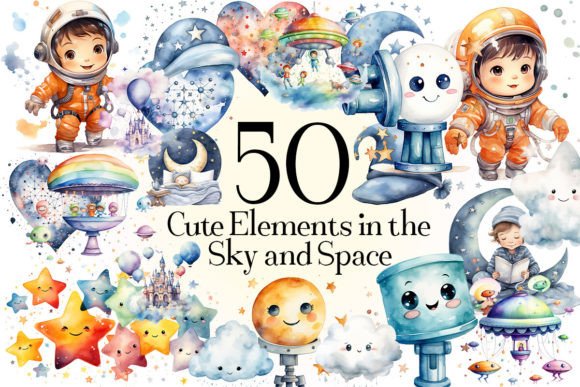
The set of Cute Elements in the Sky and Space is designed specifically for this purpose. This collection includes 50 distinct PNG files, meticulously crafted to ensure they integrate seamlessly into high-end design work. Each asset is provided at a resolution that respects professional standards—300 dpi—which is the critical threshold for print quality. Whether you are a graphic designer working on a tight deadline or a small business owner trying to launch a new product line, the technical specifications of these assets are built to prevent the headaches that come with low-resolution imagery.
What makes this collection particularly versatile is the delivery format. You receive 50 individual PNG files with transparent backgrounds. This is a massive advantage for anyone involved in layered design. Instead of spending time masking out backgrounds in Photoshop, you can simply drag and drop these elements into your canvas. Because they are isolated, they play nicely with text, photographs, and other background textures. This allows for a fluid design process where you can focus on composition and storytelling rather than tedious image prep.
The "Kawaii" Factor in Modern Branding
There is a significant trend in modern typography and branding that leans into softer, more emotive visual cues. We are seeing a move away from cold, sterile corporate aesthetics toward designs that feel human and approachable. The "cute" aspect of these sky and space elements taps into the Japanese concept of Kawaii—a style that emphasizes charm and innocence. However, in a Western marketing context, this translates to trustworthiness and warmth.
For branding, this is incredibly powerful. Consider a children’s education app, a boutique coffee shop named after a constellation, or a mental wellness blog. Using these celestial assets allows you to build a brand identity that is instantly recognizable. The elements can be used as logo design accents, social media profile borders, or recurring motifs on your website. When you pair these soft, illustrated stars and moons with a clean sans-serif font or a playful handwritten script font, you create a visual hierarchy that guides the eye and evokes an emotional response.
Practical Applications for Physical Products
The true value of these assets lies in their versatile printing possibilities. Because the files are 300 dpi, they are print-ready for a vast array of physical merchandise. This is a game-changer for entrepreneurs running print-on-demand stores or crafters selling on platforms like Etsy.
Imagine applying these designs to:
- Stationery and Invitations: Perfect for wedding cards with a celestial theme, birthday cards, or greeting cards. The transparent PNGs allow you to layer them over watercolor backgrounds or kraft paper textures effortlessly.
- Stickers and Patches: The isolated nature of the PNGs makes them ideal for die-cut stickers and embroidered patches. You don't need to worry about clipping paths or white halos.
- Apparel and Drinkware: Placing these designs on t-shirts and mugs creates merchandise that feels curated rather than generic. The high resolution ensures that even on fabric, the lines remain crisp.
- Printable Decorations: For party planners, these elements can be used to create cohesive printable decorations, from cupcake toppers to wall art.
This capability bridges the gap between digital design and physical product creation. You are not just buying a digital asset; you are buying the blueprint for a physical product line.
Digital Integration and Web Design
While print is a major use case, the digital applications for Cute Elements in the Sky and Space are equally robust. In web design, negative space is often a design challenge. Large white areas can feel empty or unfinished. These celestial elements act as perfect "spacers" or section dividers, adding personality to a site without cluttering the user interface.
For social media graphics, consistency is key. Algorithms favor accounts that have a cohesive aesthetic. By using these specific assets as recurring motifs in your Instagram stories, Pinterest pins, or Facebook headers, you create a visual thread that followers can identify instantly. They are also excellent for creating digital products such as digital planners, Zoom backgrounds, or educational worksheets. If you are a content creator, overlaying a few stars onto a video thumbnail can make the image pop against a crowded search results page.
Pairing Assets with Typography
A common question among designers is how to pair illustrative assets with fonts. The "cute" and rounded nature of these space elements suggests a specific typographic direction. To maintain visual consistency, you should look for typefaces that share similar line weights and curves.
Here are a few practical tips for font pairing:
- The Modern Contrast: Pair the playful space elements with a bold, geometric display font. The contrast between the soft illustration and the strong text creates a dynamic, modern look suitable for posters and editorial layouts.
- The Harmonious Match: Use a rounded sans-serif font. This mimics the curves of the planets and stars, creating a very gentle, soothing aesthetic perfect for baby shower invitations or wellness branding.
- The Whimsical Accent: Use a script font or handwritten font for headers, but keep your body text in a clean serif or sans-serif for readability. This allows the space elements to frame the more expressive typography.
When testing these pairings, always check the scale. The elements should complement the text, not compete with it. If the stars are too large, they become the focal point; if too small, they get lost in the background noise.
Ensuring a Professional Finish
One of the biggest hurdles in using pre-made assets is making them look "original." To avoid your designs looking like a template, consider color manipulation. While these PNGs come with transparent backgrounds, the fill colors can often be adjusted in software like Adobe Illustrator or Photoshop (using color overlays or hue/saturation adjustments) to match your specific brand identity palette. This small step ensures that the assets feel custom-made for the project.
Furthermore, always consider the licensing. Since you are likely using these for commercial projects—whether it is selling a poster or designing a logo for a client—ensure you understand the terms of use. High-quality assets like these are an investment in your professional toolkit, allowing you to deliver high-end results without the overhead of custom illustration costs.
Ultimately, the goal of any design asset is to solve a problem. The problem of "how do I make this look magical and professional" is solved instantly with a collection of high-resolution, transparent, and stylistically cohesive graphics. Whether you are crafting a universe for a new brand or adding a sparkle to a personal scrapbook, these elements provide the building blocks for imagination.