Wildflower Aesthetics Watercolor Clipart: Elevate Your Creative Projects
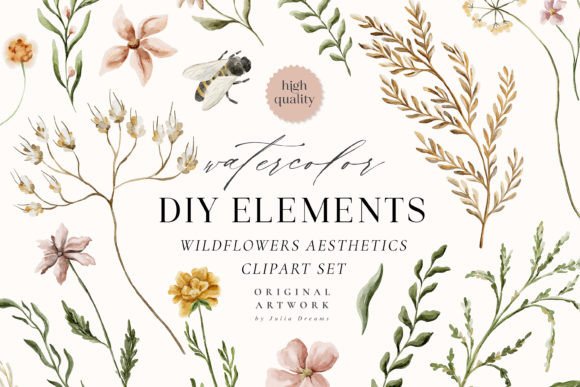
There's something undeniably captivating about watercolor art—the way colors bleed softly into one another, the organic textures, the imperfect beauty that feels both timeless and fresh. If you've ever wanted to bring that hand-painted charm into your designs without picking up a brush, the Wildflower Aesthetics Watercolor Clipart and Hand Painted Watercolor Elements Clipart Set 1 offers a genuinely useful solution. This collection of 21 hand-painted elements, delivered as high-resolution PNG files with transparent backgrounds, gives designers and creators a versatile toolkit that works across an impressive range of projects.
What Makes This Watercolor Clipart Collection Stand Out
The first thing you'll notice about these elements is their authenticity. Each piece in the Wildflower Aesthetics collection was hand-painted rather than digitally generated, which means the textures, color variations, and brush strokes carry the kind of organic imperfection that's nearly impossible to replicate with software alone. That authenticity matters more than you might think—especially when you're building a brand identity or crafting marketing materials that need to feel warm, approachable, and human.
The file specifications are practical for real-world use. With sizes ranging from 890 pixels to 4032 pixels at 300 DPI, these elements work for everything from small social media icons to large-format print pieces like posters and wall art. The transparent PNG format means you can layer these elements over any background without dealing with awkward white boxes or time-consuming masking. Whether you're working in Photoshop, Illustrator, Canva, or Procreate, the files drop right into your workflow.
Practical Applications for Designers and Business Owners
One of the strongest aspects of this clipart set is its sheer versatility. Let's walk through some real scenarios where these watercolor elements can make a meaningful difference.
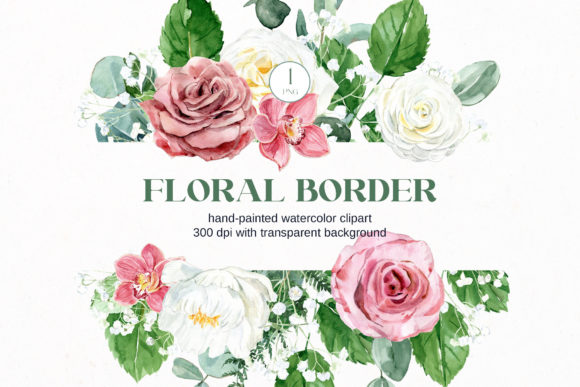
Wedding and Event Invitations: If you design invitations—whether professionally or for your own event—watercolor florals and botanicals are perennial favorites. These elements can frame text beautifully, serve as background accents, or create cohesive suites across save-the-dates, RSVP cards, and thank-you notes. The hand-painted quality gives invitations a bespoke feel that clients and guests genuinely appreciate.
Branding and Logo Design: For businesses in wellness, beauty, lifestyle, floristry, or artisan food spaces, watercolor elements can soften a brand's visual identity without sacrificing professionalism. A watercolor accent behind a wordmark or a botanical element used consistently across packaging and marketing materials creates a distinctive look that's hard to forget. The key here is restraint—using one or two elements consistently rather than scattering them everywhere builds recognition.
Social Media Graphics: Content creators and small business owners know the constant pressure of producing fresh, eye-catching social media content. These watercolor elements work beautifully as background layers for quote graphics, announcement posts, story templates, and highlight covers. They add visual interest without competing with your text or product photography. Try using a faded watercolor wash behind an Instagram quote post—you'll notice the engagement difference immediately.
Packaging and Product Design: If you sell physical products, packaging is your silent salesperson. Watercolor botanicals on labels, tissue paper, box inserts, or wrapping paper communicate quality and care. A small soap business, for example, could use these elements across their entire packaging line—labels, hang tags, shipping inserts—to create a cohesive unboxing experience that customers remember and share.
Wall Art and Printables: The high-resolution files in this set make them suitable for print-on-demand wall art, gallery prints, and downloadable digital products. If you sell on Etsy or through your own website, watercolor art prints remain consistently popular. You can combine multiple elements from the set to create original compositions, add text overlays for inspirational prints, or use individual elements as standalone pieces.
Websites and Blogs: Web designers and bloggers can use watercolor elements as subtle background textures, section dividers, or decorative accents that break up long-form content. They're particularly effective for lifestyle blogs, wedding planning sites, recipe blogs, and wellness platforms where the visual tone needs to feel inviting and personal.
Building Visual Consistency Across Your Brand
One of the most overlooked aspects of brand building is visual consistency. When your website, social media, printed materials, and packaging all share the same visual language, people start recognizing your brand before they even read your name. This watercolor clipart collection supports that consistency because the 21 elements share a unified aesthetic—they were created as a cohesive set, not cobbled together from different sources.
Think about how you might use two or three specific elements from this set as signature brand assets. Maybe a particular floral cluster becomes your go-to social media accent. Maybe a watercolor wash appears consistently in your email headers. Over time, these repeated visual cues become part of your brand's identity—subtle enough not to overwhelm, distinctive enough to be recognized.
This approach works whether you're a solo entrepreneur creating your own materials or a designer building a brand system for a client. The consistency doesn't have to be rigid. It just needs to be intentional.
Tips for Working with Watercolor Clipart Effectively
Having great assets is one thing. Using them well is another. Here are some practical considerations that will help you get the most from this collection.
Consider your color palette: Watercolor elements have naturally blended, multi-tonal colors. Before placing them into a design, think about how their colors interact with your existing palette. Sometimes adjusting the saturation or applying a subtle color overlay helps them harmonize with your brand colors. Other times, the natural palette of the watercolor can inspire a fresh direction for your project.
Layer thoughtfully: Because these are transparent PNGs, you can layer them in interesting ways. Try placing a watercolor element partially behind text and partially in front of a background shape. Experiment with opacity adjustments—a watercolor element at 40% opacity creates a very different effect than one at full strength. These subtle variations give you more mileage from a single set.
Match the mood to the message: Watercolor art carries specific emotional connotations—softness, creativity, nature, warmth, authenticity. These qualities make it perfect for certain projects but less suitable for others. A luxury tech brand probably won't benefit from watercolor accents, but an organic skincare line, a boutique bakery, a yoga studio, or a children's book illustrator absolutely will. Understanding this alignment between visual style and brand personality is what separates good design from decoration.
Don't forget print quality: The 300 DPI resolution means these elements are print-ready, but always do a test print before committing to a large run. Colors can shift between screen and paper, and watercolor textures sometimes reproduce differently on different paper stocks. A quick proof saves headaches later.
Explore commercial licensing: If you're using these elements for client work or products you sell, make sure you understand the licensing terms. Most quality clipart sets include commercial use rights, but the specifics can vary. Knowing exactly what you can and cannot do with the files protects both you and your clients.
Why Hand-Painted Elements Still Matter in a Digital World
In an era of AI-generated art and infinitely scalable vector graphics, there's a counterintuitive truth: hand-made, imperfect, tactile art often connects more powerfully with audiences than polished digital perfection. Watercolor, in particular, evokes a sense of craft and intentionality that resonates with people who are tired of generic stock imagery.
When you use hand-painted watercolor elements in your designs, you're borrowing that warmth and authenticity. You're signaling to your audience that someone cared enough to create something beautiful—not just functional. For small businesses competing against larger brands with bigger budgets, that human touch can be a genuine differentiator.
The Wildflower Aesthetics Watercolor Clipart collection captures that hand-painted quality in a format that's immediately usable across modern design workflows. It bridges the gap between traditional artistry and digital practicality, which is exactly what most creative professionals need.
Whether you're refreshing your brand identity, designing a wedding suite, building out a product line, or simply looking for beautiful elements to enhance your creative work, this collection provides a solid foundation. The variety of 21 elements gives you enough range to create diverse designs while maintaining the visual cohesion that makes a project feel professionally finished. Take some time to explore each element, experiment with combinations, and find the pairings that speak to your particular creative vision.